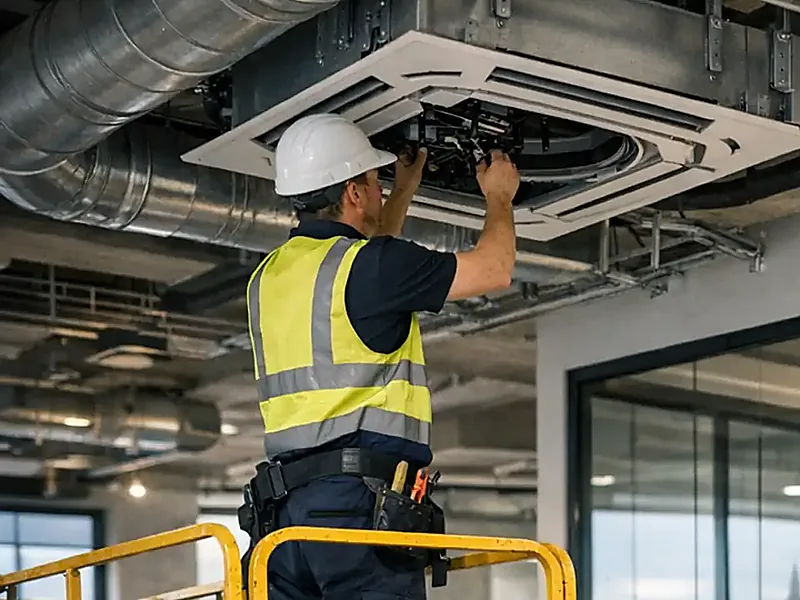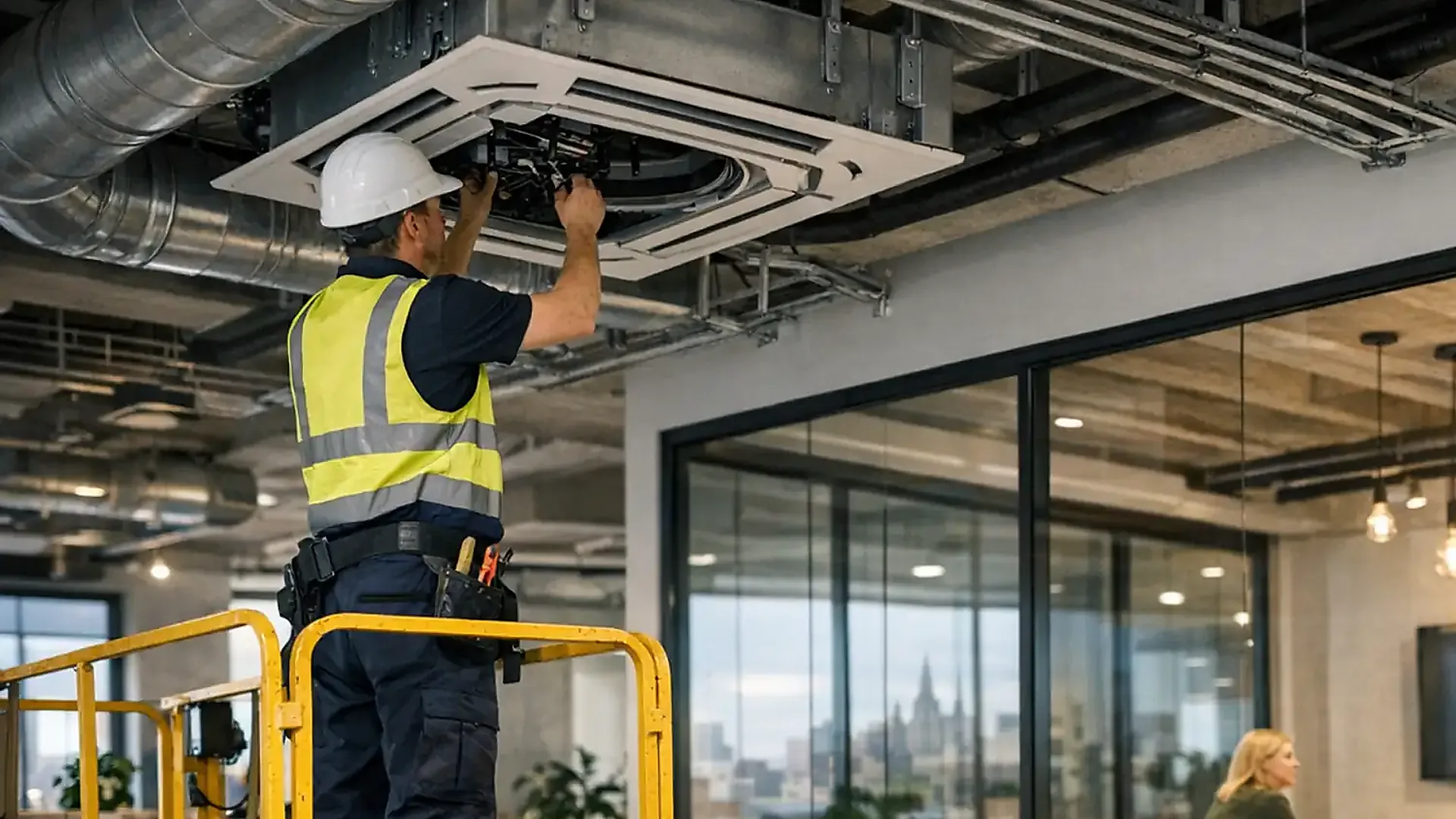
Commercial air conditioning in London has to do more than cool the room. It has to support staff comfort, customer experience, equipment performance and practical maintenance access without disrupting the way the business works.
We install and service commercial systems for offices, retail units, salons, hospitality spaces, clinics and back-of-house technical rooms.
What makes commercial projects different?
Commercial projects usually involve longer operating hours, higher heat gain, tighter access windows and more people relying on the system at the same time.
That changes how equipment is sized, where units are positioned and how maintenance access is planned. In London, it can also affect noise strategy, landlord approvals and how the outdoor equipment is routed or screened.
Do you work on offices and fit-outs?
Yes, we work on office cooling for open-plan spaces, meeting rooms, private offices and reception areas.
Office systems need even temperature control without creating draughts or obvious hot spots. We plan around layout, occupancy and likely changes to the space so the system still makes sense after the first furniture move.
Can you help with server rooms and equipment spaces?
Yes, we work on server room and comms room cooling where temperature stability matters for business continuity.
These spaces usually need dependable performance, sensible redundancy thinking and a maintenance plan that does not wait for a crisis. If the room has an existing cooling issue, we can survey the site and explain whether the problem is capacity, airflow, controls or equipment age.
How do you minimise disruption?
We minimise disruption by planning access, drilling, deliveries and commissioning around the way the site operates.
That may mean early starts, phased work or tighter coordination with landlords and fit-out teams. The goal is always the same: a system that works well without turning the project into a headache for the occupier.
What system layouts work best in commercial spaces?
The best layout depends on occupancy patterns, internal heat gain, ceiling type, opening hours and how often the space is likely to be rearranged.
Some offices suit wall-mounted or cassette-style units that can be zoned by area. Others need a broader look at circulation and whether the comfort problem is concentrated around glazing, equipment or dense staff seating. Retail and hospitality spaces bring their own demands, because customer comfort, front-of-house appearance and back-of-house practicality rarely sit in the same place.
We map the layout against the way the business actually operates. That usually leads to a better system than simply copying what worked on another site.
What about landlord approvals and fit-out coordination?
Commercial air conditioning often needs coordination with landlords, fit-out contractors, electricians and building management before installation can start.
External condenser positions, noise limits, rooftop access and service penetrations can all affect what is practical. If the project is part of a wider fit-out, it also helps to line the cooling plan up with lighting, ceilings and finishes so the trades are not fighting each other later.
We flag these issues early because they are much easier to solve before dates are locked in. Good coordination saves time and usually protects finish quality as well.
How do you future-proof a commercial install?
Future-proofing comes from sensible capacity planning, maintainable routing and controls that still make sense after the business changes slightly.
Rooms get reoccupied differently. Meeting spaces become work areas. Equipment loads grow. We think about those shifts at survey stage so the system does not become awkward the moment the layout evolves.
That does not mean overengineering everything. It means building enough flexibility into the design that the client still likes the decision a year or two later.
Frequently Asked Questions
Do you work in occupied offices and retail units?
Yes. A large part of commercial air conditioning work in London happens in live spaces that still need to function while the project is underway. That is why planning, sequencing and communication matter as much as the equipment itself.
Can you advise during early fit-out planning?
Yes. Early input often prevents awkward ceiling clashes, condenser compromises and control layouts that are harder to fix later. It is usually cheaper to make good decisions on paper than correct poor ones after other trades have finished.
Do you only install new systems?
No. We also inspect existing systems, plan upgrades and take on maintenance or repair work where the current equipment can still be used sensibly. Not every commercial site needs a full replacement to improve comfort or reliability.
For many London businesses, that planning detail is what turns a workable install into one that still feels right after the first summer, first fit-out change and first maintenance cycle.